

1·
7 hours agoThe current DMG is an Intel build but runs fine on Apple Silicon through Rosetta. Native ARM build is on the list.
The current DMG is an Intel build but runs fine on Apple Silicon through Rosetta. Native ARM build is on the list.
Known issue - the AppImage is built on Arch so it works on Arch, Fedora, openSUSE, etc. For Debian-based distros, use the APT repo or download the .deb directly
That’s exactly the way I do it. However, the mobile app is something that will be made in the near future.
You might be right. I will re-think this :)
Local-first means your data lives on your device as the source of truth, not on someone else’s server. How you choose to sync it - if at all, is up to you. That’s the point.
Sync works today with Syncthing, Nextcloud, or anything that syncs folders, notes are just .md files. Mobile app is on the roadmap.
Yes, local-first markdown like Obsidian, but fully open source (AGPL-3.0).
Note linking with square brackets - yes, supported. Graph view too so you can see connections between notes.
If you don’t rely on Obsidian plugins, you’ll feel right at home.
Android is on the roadmap, but the desktop experience comes first. Still early days.

I looked at Logseq, it’s a great project. Main difference is HelixNotes focuses on a clean WYSIWYG experience out of the box rather than an outliner approach. Different workflows.
You just described why I built HelixNotes. Clean, simple, open source (AGPL-3.0), no bloat. Desktop is ready, give it a try. Mobile is on the roadmap once the desktop experience is solid.
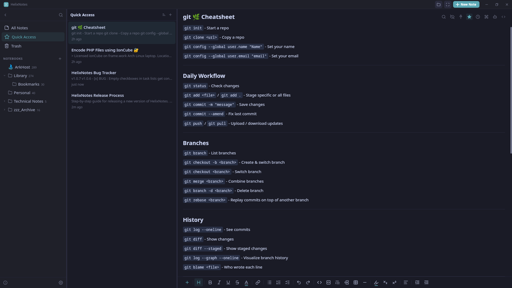
Built with Tauri on Linux, available as AppImage, AUR, and APT package. Thought it was relevant for Linux users looking for a native note-taking app.
Not yet, but it’s on the roadmap. The app is still young, right now I’m focused on getting the desktop experience solid based on feedback before shifting to mobile.
vs Obsidian: Same local-first philosophy with plain .md files, but HelixNotes gives you a clean WYSIWYG editor out of the box. No plugin setup, no CSS tweaking, no learning curve. Open an app, write, close it. vs Joplin: Joplin uses its own database format internally. HelixNotes stores everything as plain markdown files in folders on your filesystem. Also Tauri instead of Electron, so much lower resource usage. Both are great projects. I built HelixNotes because I wanted UpNote’s UI with Obsidian’s philosophy, and that combination didn’t exist.
I wrote a longer comparison here: https://helixnotes.com/why-i-built-helixnotes.html
It’s just a naming coincidence. It has nothing to do with the Helix editor.